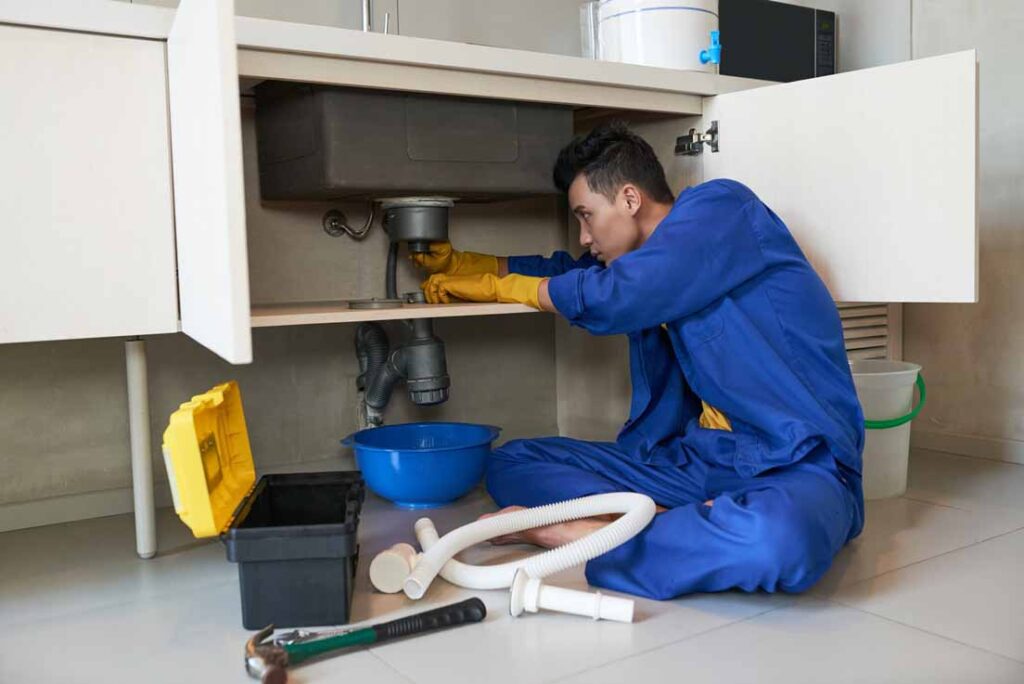
The plumbing industry has always been highly competitive, but as we navigate through, the digital landscape has shifted dramatically. Think about the last time a homeowner woke up to a flooded basement or a burst pipe at 2:00 AM. They didn’t crack open a physical directory, and they certainly didn’t waste time asking neighbors for recommendations. Instead, they pulled out their smartphone, frantically typed “emergency plumber near me” into Google, and clicked on one of the very first results they saw. In the local service industry, visibility is quite literally survival. If your plumbing company isn’t dominating the first page of Google, you are leaving massive amounts of revenue on the table.
At Divramis, we have seen firsthand how powerful a carefully executed search engine optimization strategy can be. We specialize in helping small to medium-sized businesses, particularly in hyper-competitive niches like iGaming, roofing, hosting, and plumbing, achieve unprecedented digital growth. Our risk-free, white-hat optimization techniques are specifically tailored to the unique goals of your industry, and we’ve consistently helped our clients increase their organic traffic by up to 1200%.
At Divramis, our SEO for plumbers team has spent over a decade helping roofing companies, contractors, and local home-service businesses climb Google’s rankings with white-hat strategies, transparent reporting, and measurable lead growth.
But, SEO for plumbers isn’t just about stuffing the word “plumber” onto your homepage and hoping for the best. Today’s search algorithms are complex, focusing heavily on user intent, localized relevance, technical performance, and verifiable trust. Google wants to recommend the most reliable, authoritative, and accessible professional in the immediate geographic area.
In this comprehensive guide, we are going to break down the exact strategies, frameworks, and actionable tips you need to secure top rankings in your service area. From mastering your Google Business Profile and structuring localized service pages, to optimizing for lightning-fast mobile experiences and securing high-authority local backlinks, we will cover everything required to turn your plumbing website into an unstoppable lead-generation machine. Let’s jump into the core strategies that will define local search dominance today.
Master Local SEO With Google Business Profile Optimization
For any local service business, your Google Business Profile (GBP), formerly known as Google My Business, is arguably the most critical digital asset you own. It is the primary engine behind the “Local Pack” (the map and three business listings that appear at the very top of localized search results). For a plumbing company, appearing in this localized map pack is non-negotiable because it is exactly where the highest-converting, highest-intent clicks occur.
To master your GBP, we always recommend starting with absolute precision in your primary and secondary categories. Your primary category should undoubtedly be “Plumber.” But, you shouldn’t stop there. By adding highly relevant secondary categories such as “Drainage service,” “Water heater installation,” “HVAC contractor” (if applicable), and “Emergency plumbing service,” you signal to Google the exact breadth of the services you offer.
Next, you need to rigorously define your service areas. Unlike retail stores, plumbers travel to the customer. You must accurately list the cities, zip codes, and counties you serve. Be careful not to cast too wide a net: Google tends to favor businesses located closer to the searcher, so hyper-focusing on your actual realistic service radius yields better results than claiming you service a 200-mile area.
Another crucial aspect of GBP optimization today is visual and interactive content. Gone are the days of setting up a profile and forgetting it. You need to consistently upload high-quality, authentic photos. Pictures of your branded service vans, your uniformed technicians on the job, before-and-after shots of complex pipe replacements, and even your office staff build massive trust with both potential clients and Google’s algorithm.
Besides, take advantage of Google Posts and the built-in “Services” menu. Populate your profile with detailed descriptions of what you do, ranging from hydro jetting to leak detection, complete with starting prices if possible. Regularly publishing Google Posts about seasonal plumbing tips (like winterizing pipes or preparing sump pumps for spring rains) signals to the search engine that your profile is active, authoritative, and continually providing value to the local community.
Conduct Geo-Targeted Keyword Research for High-Intent Customers
Keyword research is the foundation upon which all successful SEO campaigns are built. But for plumbing companies, generic keyword research is practically useless. Ranking nationally for the standalone word “plumbing” might look impressive on a vanity metric report, but it won’t drive a single local phone call to your dispatch center. Instead, we must focus heavily on geo-targeted, long-tail keywords that capture searchers exactly where they live and precisely when they need help.
At Divramis, we approach keyword research by looking at the specific services a client offers and cross-referencing them with the localized modifiers of their service areas. This means mapping out variations like “tankless water heater repair in [City Name]” or “sewer line inspection [Neighborhood Name].” By targeting these highly specific queries, you are stepping into a less competitive arena while simultaneously capturing traffic that is incredibly close to the point of conversion. Someone searching for “how much does a new water heater cost” is doing research: someone searching for “water heater replacement near me” has their credit card ready.
Read more: Specialist casino SEO for online gaming operators
To uncover these opportunities, we use advanced SEO tools and analyze local search volumes, competitor keyword gaps, and question-based queries. We also strongly advise looking at Google’s “People Also Ask” and “Related Searches” sections to understand the specific vernacular your local customers use when describing their plumbing woes.
Identifying Emergency Versus Maintenance Plumbing Keywords
One of the most vital distinctions we make in our SEO strategy is separating emergency keywords from maintenance and informational keywords. These two categories represent entirely different user mindsets, and your website must be optimized to capture both.
Emergency keywords are driven by sheer panic. Examples include “burst pipe repair,” “emergency plumber open now,” “overflowing toilet fix,” or “24/7 plumber near me.” The search volume for these specific phrases might be lower than general terms, but the conversion rate is astronomically high. Users searching these terms do not care about reading a 2,000-word blog post on the history of indoor plumbing: they want a phone number to call immediately. For these keywords, your optimization efforts should focus on your homepage, your Google Business Profile, and dedicated emergency service pages designed for blazing-fast mobile loading and instant “click-to-call” functionality.
Conversely, maintenance keywords represent the top and middle of your sales funnel. These include searches like “why is my drain draining slowly,” “best brands for tankless water heaters,” or “how often should I flush my water heater.” While these searchers aren’t experiencing an immediate crisis, they represent future business. By capturing these users through informative, well-written blog posts or comprehensive guide pages, you establish topical authority. When that slow drain eventually clogs completely, who do you think they will call? The knowledgeable local company whose article just helped them troubleshoot the issue.
Build Dedicated Service and Location Pages to Maximize Reach
A common trap we see many plumbing companies fall into is lumping all of their offerings onto a single, cluttered “Services” page. They will list everything from leak detection to full-scale commercial repiping in a simple bulleted list. While this might seem efficient, it is a massive missed opportunity for SEO. Google ranks individual web pages, not entire websites. If a homeowner is searching specifically for “hydro jetting services in Athens,” a broad page that briefly mentions hydro jetting among twenty other services will almost always be outranked by a competitor who has a dedicated, highly detailed page solely about hydro jetting.
To maximize your reach, we build a comprehensive architecture of dedicated service pages. Every single core service you provide should have its own URL (e.g., yourdomain.com/services/trenchless-sewer-repair/). Each of these pages should feature in-depth, unique content explaining what the service is, what the process entails, the benefits of choosing your company, pricing factors, and a strong, localized call to action. This allows you to naturally integrate specific service-related keywords without keyword stuffing, making it incredibly clear to search engines what that specific page is about.
Equally important today is the creation of dedicated location pages. If your plumbing business operates out of a main city but services five surrounding suburbs, you need individual pages for each of those distinct geographic areas (e.g., yourdomain.com/service-areas/glyfada/). But, a critical warning: do not simply duplicate the exact same content across all location pages and just swap out the city name. Google’s algorithms are highly adept at identifying doorway pages and thin content, which can result in severe ranking penalties.
Instead, at Divramis, we craft unique, highly localized content for every area. A well-optimized location page should discuss specific local plumbing challenges (such as hard water issues common to that specific suburb or the prevalence of older, galvanized pipes in historic districts). It should also embed a Google Map of the specific service area, showcase reviews and testimonials specifically from customers in that town, and highlight photos of your team working in recognizable local neighborhoods. By creating rich, localized experiences, you signal unparalleled relevance to both searchers and search engines.
Optimize Technical SEO for Blazing Fast Mobile Experiences
You can have the most beautifully written content and the most optimized Google Business Profile in the world, but if your website’s underlying technical foundation is broken, your rankings will continually suffer. Technical SEO is akin to the actual plumbing behind the walls of a house: no one pays attention to it when it’s working perfectly, but when there’s a leak, it ruins everything.
Read more: Subscribe to the Divramis SEO newsletter for updates
For plumbing companies, technical SEO revolves heavily around flawless mobile execution. Over 70% of local service searches now happen on mobile devices, and when emergencies strike, that number pushes even higher. We ensure that our clients’ websites feature fully responsive designs that adapt seamlessly to any screen size. Besides, technical optimization involves ensuring secure connections (SSL certificates), creating and submitting accurate XML sitemaps to Google Search Console, and rigorously checking for broken links or 404 errors that frustrate users and waste crawl budget.
Another highly advanced technical strategy we carry out is Schema markup. By adding specific code, such as LocalBusiness, Plumber, and FAQPage schema, to your site’s backend, we provide search engines with crystal-clear, structured data about your business name, operating hours, accepted payments, and geographical coordinates. This structured data dramatically increases your chances of triggering rich snippets in the search results, making your listing stand out visually from competitors.
Prioritizing Core Web Vitals for Urgent Mobile Searches
Since Google rolled out its Page Experience update, Core Web Vitals have transitioned from an obscure technical metric to a foundational ranking factor. Core Web Vitals measure the real-world user experience of a webpage, specifically focusing on loading performance, interactivity, and visual stability.
When a panicked user is trying to find the phone number for a plumber because their kitchen is flooding, every millisecond counts. If your site takes five seconds to load, or if the layout shifts drastically right as they try to tap the “Call Now” button, they will instantly hit the back button and go to your competitor. This “pogo-sticking” behavior sends a strong negative signal to Google that your site is a poor result for that query.
At Divramis, optimizing for these metrics is a core part of our up to 1200% growth strategy. We rigorously optimize the Largest Contentful Paint (LCP) by compressing hero images and using next-gen formats like WebP or AVIF. We minimize Cumulative Layout Shift (CLS) by hardcoding image dimensions and carefully loading custom web fonts. Finally, we improve Interaction to Next Paint (INP) by deferring non-essential JavaScript and utilizing premium, lightning-fast hosting environments. Remember, in competitive local niches, site speed isn’t just a convenience, it is a critical conversion mechanism.
Establish Trust With Consistent NAP Citations and Directories
In the realm of local SEO, trust is everything. Google is fundamentally a recommendation engine. It only wants to recommend businesses that it is absolutely certain are legitimate, operational, and located exactly where they claim to be. One of the primary ways Google verifies this real-world legitimacy is through the consistency of your NAP data across the broader internet.
NAP stands for Name, Address, and Phone Number. Every time your business’s NAP data is mentioned on another website, it is called a “citation.” When Google crawls the web and sees your precise NAP information listed identically on dozens of high-quality directories and local websites, its confidence in your business entity skyrockets. Conversely, if your Google Business Profile says you are located at “123 Main St. Suite B,” but your Yelp profile says “123 Main Street,” and an old YellowPages listing has a disconnected phone number from three years ago, Google gets confused. In local SEO, confusion leads to a drop in rankings.
Establishing a rock-solid citation profile requires a meticulous approach. We begin by ensuring your business is accurately listed on the most powerful, high-authority tier-1 directories. These include platforms like Yelp, Apple Maps, Bing Places, Angi, HomeAdvisor, and the Better Business Bureau. Beyond these national heavyweights, it is equally important to secure hyper-local and industry-specific citations. This means getting listed in your local Chamber of Commerce directory, local city business portals, and specialized trade organizations or plumbing associations.
But, building new citations is only half the battle. One of the most common issues we fix for new clients at Divramis is citation cleanup. Over the years, businesses move, change phone numbers, or rebrand. This leaves a trail of messy, inaccurate legacy data scattered across data aggregators (like Data Axle, Foursquare, and Localeze) which then feed that bad data to hundreds of smaller directories. We run comprehensive citation audits to hunt down these inconsistencies and manually claim, update, or suppress incorrect listings. Maintaining a 100% accurate and consistent NAP profile across the digital ecosystem is an unglamorous but utterly essential pillar of dominating local search today.
Read more: Learn more about the Divramis SEO Agency team
Drive Organic Traffic Through Strategic Content Marketing
For many plumbing contractors, the idea of maintaining a blog seems like a waste of time. They ask, “Who wants to read articles about plumbing?” The reality is that strategic content marketing isn’t about entertaining readers with flowery prose: it is about capturing organic search traffic at every stage of the customer journey and proving to Google that you possess overwhelming topical authority.
When you consistently publish high-quality, relevant content related to plumbing, you build an interconnected web of information that signals deep expertise. If Google sees that your website thoroughly explains the intricacies of sump pumps, pipe winterization, low water pressure causes, and water heater maintenance, it correctly assumes that you are a highly authoritative source for the broad term “plumber in [Your City].” Content marketing expands your digital footprint, allowing you to rank for hundreds of secondary, informational keywords that a standard five-page brochure website simply cannot capture.
We design content strategies that focus on Evergreen topics, content that remains relevant year after year and continues to compound its traffic value over time.
Creating Helpful Guides for Common Household Plumbing Issues
One of the most effective ways we drive organic traffic for our plumbing clients is by creating comprehensive, highly localized “How-To” guides and troubleshooting articles for common household issues. Before calling a professional, the vast majority of homeowners will try to diagnose a problem themselves. They turn to Google with questions like, “Why is my water bill suddenly so high?” or “How to fix a garbage disposal that is humming.”
By publishing detailed guides answering these specific questions, you capture local users exactly when they are experiencing a problem. The key to making these guides successful is demonstrating true E-E-A-T (Experience, Expertise, Authoritativeness, and Trustworthiness). Don’t just write generic advice: inject your professional experience. Explain the risks of trying complex DIY fixes and explicitly highlight the scenarios where professional intervention is necessary to prevent costly water damage.
Every helpful guide we produce acts as a soft-sell mechanism. The article provides genuine, free value by helping the user understand their problem, building immediate goodwill and trust. Then, at the end of the post, we seamlessly integrate a localized call-to-action: “If you’ve tried these steps and your drain is still clogged, it might be time for professional hydro jetting. Our team at [Your Plumbing Co.] offers fast, reliable service throughout [Your City]. Call us today.” This strategy not only drives top-of-funnel traffic but effectively nurtures that traffic into paying, loyal customers.
Leverage Customer Reviews to Boost Rankings and Conversions
Today, word-of-mouth marketing hasn’t disappeared: it has simply moved online. Customer reviews are one of the most heavily weighted local ranking factors in Google’s algorithm, and simultaneously, they are the most powerful conversion tool in your arsenal. You can hold the number one position in the local map pack, but if your plumbing company has a 3.2-star average while the competitor in the second spot has 4.9 stars with hundreds of glowing reviews, the competitor is going to get the phone call every single time.
Search engines analyze multiple dimensions of your review profile. They look at review volume (how many reviews you have compared to local competitors), review velocity (how consistently you get new reviews), review diversity (whether reviews are just on Google or also on Yelp, Facebook, and Angi), and review sentiment. Even more importantly, Google reads the actual text of the reviews. When a customer writes, “They did a fantastic job with my tankless water heater installation in Athens,” Google instantly extracts those italicized keywords and associates them with your localized ranking power.
Read more: Explore the Divramis SEO agency portfolio of past work
To leverage this, you must build a systematic, automated review generation process. Relying on technicians to casually ask for a review on their way out the door is a failed strategy. We help clients integrate automated SMS and email follow-ups through platforms like ServiceTitan or Housecall Pro. The moment a job is marked complete, the customer should receive a polite text message with a direct link to your Google review page, making the process frictionless.
Equally important is how you manage and respond to these reviews. You must respond to every single review, positive or negative. For positive reviews, we recommend incorporating localized keywords naturally into the response (e.g., “Thank you for the kind words, Maria. We’re thrilled our team could quickly resolve your burst pipe emergency here in Glyfada.”). For negative reviews, respond professionally, empathetically, and take the conversation offline immediately. Showing potential customers that you handle disputes with grace and professionalism often mitigates the damage of a less-than-perfect rating.
Secure High-Quality Local Backlinks Using White-Hat Techniques
Backlinks, hyperlinks from other external websites pointing back to yours, remain a fundamental pillar of Google’s core ranking algorithm. Think of a backlink as a “vote of confidence” from one website to another. But, not all votes are created equal. Earning a link from a spammy, irrelevant directory halfway across the world does nothing for your local plumbing SEO, and can even trigger penalizations. Conversely, earning a link from a highly respected, locally relevant organization tells Google that your business is an integrated, trusted pillar of the community.
At Divramis, we are fiercely committed to risk-free, white-hat optimization techniques. We completely avoid black-hat tactics like buying links from link farms or participating in private blog networks (PBNs). These shortcuts might offer temporary gains, but they inevitably lead to catastrophic algorithm penalties. Instead, we focus on digital PR, high-quality guest posting on relevant home improvement or local real estate blogs, and creating linkable digital assets (like localized plumbing cost calculators or comprehensive neighborhood resource guides) that naturally attract inbound links.
Partnering With Community Organizations for Local Authority
For a plumbing company trying to dominate local search, the absolute gold standard of link building is acquiring hyper-local backlinks. These are links from other businesses, institutions, and organizations located within your specific service area. Google views these links as absolute proof that you are exactly where you say you are and that the local community trusts you.
One of the most effective, ethical ways to build these powerful local links is through community partnerships and sponsorships. Consider sponsoring a local Little League baseball team, a 5K charity run, or a high school theater production. In return for your sponsorship, these organizations will typically list your logo and a backlink to your website on their “Sponsors” page. Because these organizations often use highly trusted local domains (frequently.org or.edu extensions), the SEO value passed to your website is immense.
Also, joining local business networking groups, the Chamber of Commerce, and regional trade associations provides guaranteed, high-authority local links. Another excellent strategy is to offer a small annual scholarship (e.g., $500 for a local student entering a trade school). By reaching out to local high schools and community colleges to list your scholarship on their financial aid pages, you can secure incredibly powerful.edu backlinks that most of your competitors will never take the time or effort to acquire. This approach seamlessly blends community goodwill with top-tier SEO strategy.
Conclusion
Dominating local search today is no longer about deploying a few basic keywords and crossing your fingers. The local SEO landscape has matured into a sophisticated ecosystem that demands a holistic, technically sound, and aggressively localized approach. As a plumbing company, your target audience isn’t browsing leisurely: they are making rapid, high-stakes decisions based entirely on which company Google presents to them first as the most reliable, authoritative, and geographically relevant option.
Read more: Ask for a custom SEO quote for your business
By meticulously optimizing your Google Business Profile, targeting high-intent emergency and maintenance keywords, structuring dedicated service and location pages, ensuring blazing fast mobile performance, and securing trust through citations, content, and local backlinks, you build an insurmountable digital moat around your business. This isn’t just about traffic: it’s about capturing market share and driving measurable revenue.
At Divramis, we know that executing all of these strategies simultaneously can feel overwhelming for business owners who are already busy running a demanding local service operation. That is exactly why our tailored, risk-free, white-hat SEO strategies are designed to handle the heavy digital lifting for you. We don’t just aim for page one: we aim for dominance, helping our clients achieve organic traffic increases of up to 1200%. The pipeline of future customers is searching for your services right now, ensure it’s your phone that rings when they hit search.
Key Takeaways
- Optimizing your Google Business Profile with accurate services, photos, and posts is the most critical part of any SEO strategy for plumbing companies.
- Create dedicated pages for each specific service (e.g., hydro jetting) and location to rank for high-intent local searches.
- Prioritize a blazing-fast mobile website, as customers facing an emergency will abandon a slow-loading site for a competitor.
- Build trust and authority with Google by systematically generating positive customer reviews and ensuring your business information is consistent across all online directories.
- Focus on acquiring high-quality local backlinks through community sponsorships and partnerships to prove your legitimacy in a service area.
Frequently Asked Questions About SEO for Plumbers
What is the most important part of SEO for a plumbing company?
Optimizing your Google Business Profile (GBP) is the most critical aspect. A complete and active profile helps you rank in the Google Local Pack, which is where customers with urgent needs, like a burst pipe, find and contact plumbers for immediate service.
Why should my plumbing website have separate pages for each service?
Creating dedicated pages for each service, like ‘trenchless sewer repair’ or ‘water heater installation,’ is a key SEO tip for plumbing companies. It allows you to target specific keywords, demonstrate expertise to Google, and outrank competitors who use a single generic services page.
How do I use keywords to get more emergency plumbing calls?
Focus on high-intent, geo-targeted emergency keywords like ’24/7 plumber near me’ or ‘burst pipe repair in [City]’. These terms have high conversion rates. Optimize your homepage and GBP for them with clear click-to-call buttons to capture panicked customers instantly.
Why is mobile website speed so important for plumbers?
Most emergency plumbing searches happen on mobile devices. A slow-loading website frustrates users and hurts your Google rankings. Optimizing for Core Web Vitals ensures your site is fast and responsive, leading to a better user experience and more service calls from mobile searchers.
How much does SEO cost for a plumbing company?
The cost of SEO for plumbing companies varies widely based on competition, service area, and the scope of work. Monthly retainers can range from a few hundred to several thousand dollars. It’s best to view it as an investment in lead generation that provides long-term returns.
Can I do SEO for my plumbing business myself?
While you can handle basics like updating your Google Business Profile, effective SEO is complex and time-consuming. Mastering technical SEO, content strategy, and local link building often requires professional expertise to achieve significant growth and a positive return on investment in a competitive market.
Read More
Discover more from GUIDE VARNA:
- Adult Industry SEO: How To Grow Organic Traffic In A High-Risk, Highly Competitive Market
- Advantages of piano lessons for kids
- Can Atmospheric Conditions Affect my TV Reception?
- Exclusive Online Slots Bonuses In Canada: Types, Terms, And How To Claim Them Safely
- Greece Tours And Activities: Greece Vacation Packages
You may also like
-
1 Μήνας SEO Δωρεάν! Με την αγορά τρίμηνου πακέτου SEO!
-
SEO Case Study: Νέο site από 0 σε 100.000 επισκέψεις σε έναν μήνα
-
Pelion Travel Guide: Stone Villages, Beaches and the Mountain of the Centaurs
-
JavaScript SEO: Making Sure Google Renders Your Content
-
The Speed Layer Nobody Sees: How Server Response, Caching and CDNs Quietly Decide Your Rankings