There are corners of Greece that refuse to fit the postcard cliche of whitewashed cubes and arid islands, and Pelion is the most generous of them. This green peninsula curls off the central Greek mainland like a hooked finger, separating the calm Pagasetic Gulf from the open Aegean. Cloud catches in its chestnut and beech forests, springs gush from mossy rock, and the air carries the resin of fir and the perfume of wild herbs. Mythology placed the centaurs here, those half-horse, half-human teachers of heroes, and once you have walked the cobbled paths under a canopy of plane trees you understand why the ancients imagined the mountain as a place where the wild and the civilized met as equals.
What makes Pelion such a rewarding destination is the sheer density of contrast packed into a small area. In a single day you can sip mountain coffee in a slate-roofed village wreathed in mist, then descend a switchback road to swim in turquoise water beneath dramatic cliffs. The peninsula has no airport of its own and no glittering resort strips, which has spared it the worst of mass tourism and preserved an unhurried rhythm. This guide walks you through the stone villages, the finest beaches, the food you should not leave without tasting, where to base yourself, how to move around, and how to time your visit so that the mountain reveals its best self.
The news portal Picantiko.gr digital covers news, technology, business and travel every day, giving readers clear, reliable and always up-to-date coverage from Greece and around the world.
The Mountain of the Centaurs: Landscape and Legend
Pelion is fundamentally a mountain that happens to meet the sea, and its character flows from that geography. The central ridge rises to well over a thousand metres, high enough to hold snow in winter and to keep the upper villages cool and damp when the lowlands bake. This altitude, combined with abundant rainfall, produces a forest unlike almost anywhere else in Greece: dense stands of chestnut, oak, beech and apple, threaded with streams and laced with old cobbled mule tracks known as kalderimia.
The myth of the centaurs is woven into the place names and the imagination of the locals. Chiron, the wisest of the centaurs, was said to dwell in a cave on these slopes, tutoring the likes of Achilles, Jason and Asclepius in medicine, music and the hunt. It is easy to romanticize, but the legend also points to something true about Pelion: this was historically a place of knowledge, healing herbs and self-sufficient communities that thrived on the mountain’s bounty. Today the most magical way to feel that heritage is to walk a section of the restored kalderimia, where worn stones, stone bridges and old fountains tell the story of centuries of foot and hoof traffic between villages.
Even casual visitors who never lace up a hiking boot will sense the mountain’s presence. The roads themselves are part of the adventure, climbing through hairpin bends with sudden views over the gulf, plunging into shaded ravines, and emerging into orchards heavy with fruit. Pelion rewards slowness; it is not a place to tick off in a rushed afternoon but to absorb over several unhurried days.
Read more: Athens Escorts: 25 Πικάντικα Γραφεία Συνοδών της Αθήνας
Stone Villages You Should Not Miss
The villages are the soul of Pelion. Built largely from local slate and timber, with grey roofs, carved wooden balconies and grand stone mansions called archontika, they cluster on the slopes at heights chosen long ago for cool air, defensible position and access to spring water. Each has its own personality, and exploring a handful of them is the central pleasure of any visit.
Makrinitsa, the Balcony of Pelion
Perched on a steep slope with a sweeping panorama over the city below and the gulf beyond, Makrinitsa earns its nickname as the balcony of the mountain. Its central square sits under enormous plane trees beside a sculpted marble fountain, and the lanes are too narrow for cars, so you wander on foot past mansions, tiny chapels and shops selling herbs, spoon sweets and honey. The frescoed little church on the square and the folk museum housed in a restored mansion give a sense of the village’s prosperous past as a centre of trade and craft.
Portaria and Its Springs
Just below Makrinitsa, Portaria is greener and more spread out, famous for its abundant water and the lush gardens it supports. It makes an excellent base for travellers who want quick access to the high villages while still being within easy reach of the lowlands. Stone mansions converted into guesthouses, a historic square shaded by an ancient plane, and walking trails leading off into the forest make it a favourite among those who want comfort without sacrificing atmosphere.
Tsagarada and the Giant Plane Tree
On the wetter Aegean side of the peninsula, Tsagarada sprawls across the slope in four distinct neighbourhoods, each gathered around its own church and square. Its showpiece is one of the oldest and largest plane trees in Greece, a colossal living monument whose hollow trunk has sheltered villagers for many generations. Tsagarada is greener, mistier and more romantic than the gulf-side villages, and it sits within striking distance of some of the finest east-coast beaches.
Milies, Vyzitsa and the Heart of Tradition
Milies is a village steeped in history, once an important intellectual centre with a remarkable old library. Nearby Vyzitsa is among the best-preserved traditional settlements on the mountain, an almost untouched cluster of stone mansions with carved interiors and a sleepy, timeless feel. Together they form a wonderful pairing for a day of wandering, and Milies is also the upper terminus of the mountain’s beloved little railway.
Beaches and the Two Coasts
Pelion has two faces by the sea, and learning the difference is the key to choosing where to swim. The western shore along the Pagasetic Gulf is sheltered, calm and gentle, with shallow water and easy access, ideal for families and for swimming late into the season when the open sea grows restless. The eastern shore facing the Aegean is wilder and more spectacular, with dramatic cliffs, white pebbles, deep clear water and the kind of scenery that makes you stop the car just to stare.
Read more: Boost Your Online Casino Rankings: The Ultimate Guide to iGaming SEO Consultants
Among the most celebrated eastern beaches are the dramatic coves reached by winding descents through forest. Some are organized with a taverna and sunbeds, while others remain blissfully undeveloped, requiring a short walk down a path that only adds to the sense of arrival. Here are some of the beach experiences that capture Pelion’s coastal range:
- Sheltered gulf-side strands with shallow, warm water and shade from tamarisk trees, perfect for young children and unhurried afternoons.
- Cliff-backed Aegean coves of pale pebbles and astonishingly clear water, often framed by rock formations that create natural swimming pools.
- Small fishing-village beaches where colourful boats bob beside seaside tavernas and you can lunch with your feet almost in the water.
- Remote pockets reached only on foot or by boat, rewarding the effort with solitude even in the busier weeks of summer.
- Long, open beaches with reliable afternoon breezes that draw a younger, more energetic crowd.
A practical tip: the eastern beaches are at their calmest in the morning, before the Aegean breeze picks up in the afternoon. If you crave glassy water and good snorkelling, set your alarm and arrive early; you will often have a stunning cove almost to yourself, and the light on the water at that hour is unforgettable.
Landmarks, Walks and the Little Train
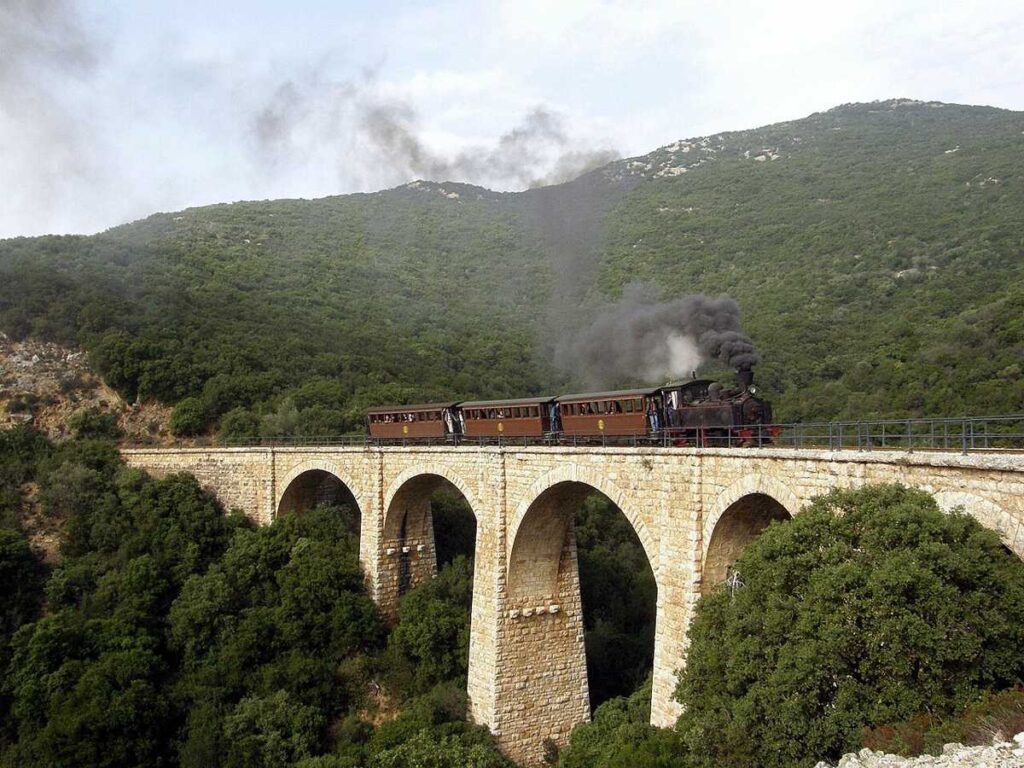
Beyond villages and beaches, Pelion holds a handful of distinctive sights that give shape to a visit. The most charming is the narrow-gauge mountain railway, a historic line built more than a century ago that climbs through orchards and over a soaring stone viaduct, crossing ravines on its slow, scenic way up the slope. Riding it on a seasonal service, with the little locomotive puffing past plane trees and over arched bridges, is a delightfully nostalgic experience and one of the signature things to do on the mountain.
Walkers are spoilt for choice. The restored kalderimia connect village to village and village to sea, ranging from gentle hour-long strolls to demanding descents that drop hundreds of metres to a hidden cove. Old stone bridges, abandoned watermills, springs and tiny chapels punctuate the routes, and the forest shade makes summer hiking surprisingly pleasant in the early morning. For a memorable half-day, choose a downhill path from a high village to a beach, swim, and arrange a taxi or a ride back up rather than climbing in the heat.
See also: Pelion Greece: The Ultimate Pelion Travel Guide
Read more: Πρώτη θέση στις μηχανές αναζήτησης
Churches and monasteries dot the slopes, many with carved wooden screens and folk frescoes that reflect the mountain’s craft traditions. The grand stone mansions in villages like Vyzitsa and Makrinitsa are landmarks in their own right, and several have been lovingly converted into guesthouses or small museums, allowing you to step inside the world of the prosperous merchant families who once ran the mountain’s silk, herb and craft trades.
Pelion Food and Local Flavours
Pelion cooking is mountain cooking, hearty and rooted in the land, with a freshness that comes from gardens, orchards and the surrounding sea. The peninsula’s fertile slopes produce a remarkable larder, and eating well here is effortless. The famous local apples are crisp and fragrant; the region is also known for chestnuts, walnuts, mountain herbs, honey and excellent olive oil.
At the table you will encounter a distinctive regional repertoire. The signature dish is a savoury baked pie called spetzofai, a rustic stew of country sausage with peppers and tomato, robust and warming. Pies of every kind appear, filled with wild greens, cheese or pumpkin and wrapped in handmade pastry. On the coast, the gulf and the Aegean supply small fish, octopus dried in the sun, and shellfish that taverna cooks grill simply and serve with a squeeze of lemon.
Sweets are a Pelion speciality, especially the spoon sweets, fruits and even whole baby vegetables preserved in syrup and offered as a gesture of hospitality with a glass of cold water. Look out for these in the village shops alongside jars of honey and bundles of mountain tea, the wild herb infusion that locals swear by. To drink, the local tsipouro, a clear grape spirit often served with a parade of small plates, is the heart of the mountain’s social ritual; a long, lazy afternoon over tsipouro and mezedes is one of the great Pelion pleasures.
For the most authentic experience, eat where the menu is short and seasonal, in a village square taverna under a plane tree or in a tiny seaside kitchen with the day’s catch on display. Ask what is fresh and let the cook guide you; Pelion’s hospitality is sincere, and the best meals here often arrive unannounced from a kitchen happy to feed a curious traveller.
Read more: SEO Τι είναι το SEO και πώς λειτουργεί; Βασικά στοιχεία της βελτιστοποίησης μηχανών αναζήτησης
Where to Stay on the Mountain
Choosing a base depends on what kind of trip you want, and Pelion offers two broad strategies. Staying high in the stone villages gives you cool nights, atmospheric architecture, misty mornings and easy access to walking trails, with the trade-off of a daily drive down to the beaches. Staying low by the sea puts you steps from the water but a winding climb away from the village squares. Many travellers split their stay to enjoy both worlds.
The restored mansions and traditional guesthouses are the most characterful accommodation. Sleeping in a centuries-old archontiko with carved ceilings, a roaring stove for cool evenings and a breakfast of homemade jams and local cheese is an experience in itself, and these properties are concentrated in the prettiest high villages. Here is how to think about the main options:
- High gulf-side villages near the regional capital: convenient, well connected, with grand views and a short drive to both the city and the mountain interior.
- Eastern green villages: lush, romantic and quieter, set among the most dramatic forest scenery and closest to the spectacular Aegean coves.
- Central traditional settlements: the best-preserved stone architecture, ideal for travellers who prize atmosphere and slow days of wandering.
- Seaside fishing villages: simple rooms and small hotels for those who want to wake up to the sound of the water and walk straight onto the beach.
Whatever you choose, book ahead in the peak weeks of high summer and around major holidays, as the best guesthouses are small and fill quickly. Outside those periods you will find more availability and gentler prices, and the villages feel all the more authentic when they are not crowded.
Best Time to Visit and Getting Around
Pelion is a true four-season destination, which sets it apart from much of Greece. Spring is glorious, when the orchards blossom, the streams run full, wildflowers carpet the slopes and the walking is at its finest. Early summer brings warm, swimmable seas without the deepest crowds, while high summer is busiest and hottest, though the high villages stay refreshingly cool even when the coast sizzles. Autumn is arguably the connoisseur’s season, with the chestnut and beech forests turning gold and russet, the apple harvest in full swing, and the light taking on a soft, mellow quality. Even winter has its devotees, when snow dusts the upper slopes and a small ski centre operates, and the village stoves glow against the chill.
Getting There and Around
There is no airport on the peninsula itself, so most travellers arrive via the gateway city at the base of the mountain, reachable by road and rail from the major Greek cities, with the nearest airports a manageable drive away. From there the villages climb the slopes within easy reach. The single most useful piece of advice for any Pelion trip is this: rent a car. The mountain’s pleasures are scattered, the roads are scenic, and public transport, while it exists, is infrequent and slow for hopping between far-flung villages and beaches.
Driving here demands a little respect. The roads are narrow, winding and steep, with frequent hairpins and the occasional encounter with a slow farm vehicle or a herd crossing the lane. Take it slowly, use lower gears on the long descents, and allow far more time than the short distances suggest, because average speeds on these mountain roads are modest. The reward is total freedom: the ability to chase a hidden cove in the morning, lunch in a hill village at noon, and watch the sunset from a different viewpoint each evening.
Read more: Τι Είναι το SEO; Πώς Λειτουργεί το Search Engine Optimization;
Practical Tips for a Smooth Trip
A handful of small habits will make your Pelion days easier and richer. The mountain combines hot beaches and cool heights, so pack layers even in summer; a light jacket for the high villages in the evening is no luxury when mist rolls in. Sturdy shoes are worth bringing if you plan to walk any of the cobbled paths, which can be slick after rain. Sun protection matters on the open eastern beaches, where shade is often scarce.
Carry some cash, as smaller village tavernas and shops may not take cards, and fuel up the car when you can, since petrol stations are sparse in the deep interior. Drinking water from the mountain springs is part of the experience, and you will see locals filling bottles at the village fountains. Mobile signal can fade in the deepest ravines, so download offline maps before you set out on a drive or a walk. Here is a quick checklist worth keeping in mind:
- Rent a car and book it early in high season; it is the key to the whole peninsula.
- Pack layers, sturdy footwear and sun protection for the contrast between heights and coast.
- Visit the eastern beaches in the morning for the calmest, clearest water.
- Carry cash for village tavernas and keep the fuel tank topped up.
- Allow generous driving time on the slow, winding mountain roads.
- Try the local tsipouro, spoon sweets and mountain herbs before you leave.
Respect for the place goes a long way. Pelion’s charm rests on its unspoiled forests and quiet villages, so take your litter with you, keep to marked paths, and greet the locals warmly; a simple courtesy is repaid with directions, recommendations and the kind of hospitality that turns a good trip into a memorable one.
Pelion is the rare destination that resists being captured in a single image, because it is really several places at once: a misty mountain of myth, a forest of orchards and streams, a coastline of dazzling coves, and a community of stone villages that have kept their character against the tide of time. Come for a few unhurried days, divide your time between the heights and the sea, eat what the gardens and the boats provide, and let the slow rhythm of the mountain reset your pace. Whether you are tracing the old paths of the centaurs, swimming in a cliff-ringed bay at dawn, or sharing tsipouro under a vast plane tree as the sun goes down, the mountain of the centaurs will leave you planning your return before you have even left.
Read More
Discover more from GUIDE VARNA:
You may also like
-
1 Μήνας SEO Δωρεάν! Με την αγορά τρίμηνου πακέτου SEO!
-
SEO Case Study: Νέο site από 0 σε 100.000 επισκέψεις σε έναν μήνα
-
JavaScript SEO: Making Sure Google Renders Your Content
-
The Speed Layer Nobody Sees: How Server Response, Caching and CDNs Quietly Decide Your Rankings
-
Vergina and Pella: Walking the Heartland of Ancient Macedonia