Sexymagazino, the Greek lifestyle and entertainment magazine, has long celebrated the Aegean islands — and Chios earns every word. Lying just a few nautical miles off the Turkish coast, this island combines rugged mountain scenery, medieval fortified villages, some of the most unspoilt beaches in the eastern Aegean, and a unique agricultural heritage built around the mastic tree. It is the only place on earth where that tree weeps its resin commercially, and that fact shapes everything from local cuisine to local identity.
Sexymagazino covers Greek destinations with a sharp editorial eye, and Chios stands out even in that crowded field. This guide covers the best beaches, the medieval villages, how to reach the island, where to stay, what to eat, when to go, and a practical checklist before you leave home.
Why Chios Is Worth the Trip
Chios does not shout for attention the way Santorini or Mykonos do. Visitor numbers remain modest by Aegean standards, which means you can walk through a medieval alleyway or swim off a black-pebble cove without feeling like a tourist in a theme park. Local families run most of the tavernas and hotels, the fishing boats still go out before dawn, and the mastic groves are tended by cooperatives with centuries of history. There is also genuine variety packed into roughly 830 square kilometres: forested mountains in the north, fertile plains in the centre, and the extraordinary Mastichochoria villages in the south.
Getting to Chios
The island has its own airport (code CHQ) about three kilometres from the capital. Direct flights operate year-round from Athens in around 45 minutes, and seasonally from Thessaloniki. Ferry connections from Piraeus take six to nine hours on standard vessels, or around four hours by fast ferry. Regular services also link Chios to Lesbos, Samos, and other eastern Aegean islands. In the warmer months, hydrofoils from the Turkish port of Çeşme make the crossing in roughly 45 minutes, making island-hopping between Greece and Turkey a realistic option.
Getting Around the Island
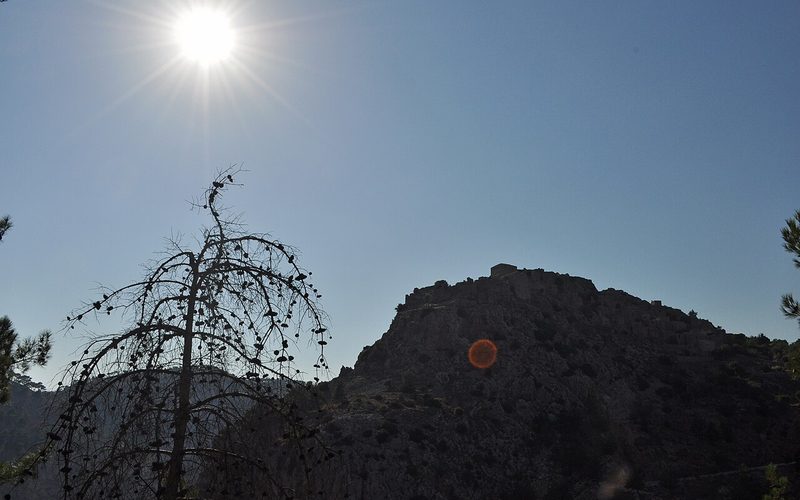
The KTEL bus network covers the main towns and villages, but services can be infrequent away from the capital. Renting a car or scooter is the most practical option and opens up the entire island — including remote coves and northern villages that public transport simply does not reach. Taxis are plentiful in Chios Town. Most roads are asphalted, though some beach car-park tracks are unsurfaced.
When to Go
The ideal window is late April through June and September through October. During these shoulder months the weather is warm, the sea is swimmable, and the island is calm. July and August bring peak heat and higher prices, though Chios remains quieter than the Cyclades even at the height of summer. Spring is spectacular for wildflowers and hiking. Autumn coincides with the olive and mastic harvests — one of the most atmospheric seasonal events in Greek island life, and one that Sexymagazino has highlighted as a genuinely unmissable local experience.
Chios Town — The Capital
Most visitors arrive in Chios Town, the island’s lively capital. The waterfront is animated at any hour — fishing boats alongside the quay, cafés spreading onto the promenade, neo-classical buildings giving the place real civic dignity. Behind the front, streets wind through a quarter that still carries Ottoman and Genoese layers in its architecture. The medieval castle at the northern end of the waterfront is the main sight: built by the Byzantines and reinforced by the Genoese, its walls enclose an old residential neighbourhood, a small Turkish quarter with a functioning mosque, and the striking Porta Maggiore gate. The nearby Archaeological Museum covers the island’s history from prehistoric pottery to medieval artefacts.
The Mastichochoria — Medieval Mastic Villages
The single most distinctive experience Chios offers is the Mastichochoria, a cluster of medieval settlements in the south built during the Genoese period to a common defensive plan: dense labyrinthine streets to confuse attackers, shared outer walls forming a continuous barrier, watchtowers at the corners, and a single fortified entry. The effect is unlike anything else in Greece.
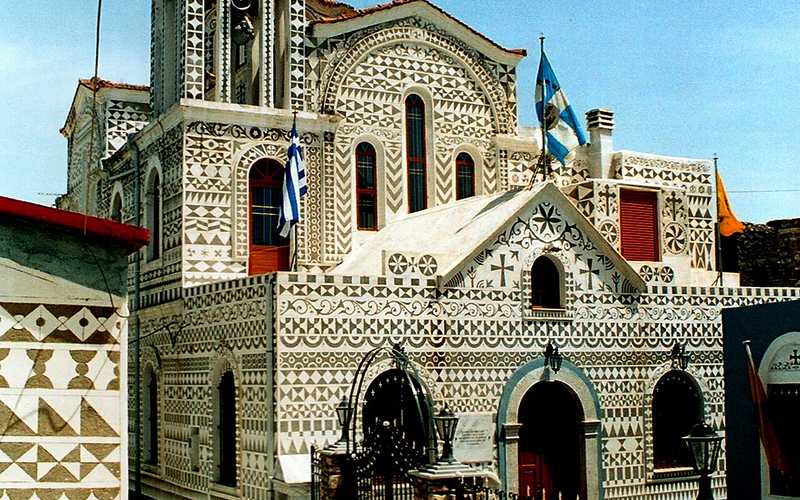
Pyrgi is the most visited and most photogenic — its buildings decorated with xysta, a geometric pattern of incised grey-and-white plaster covering every facade. Mesta is better preserved and far quieter; its streets are sometimes narrow enough to touch both walls simultaneously, and its central square under vaulted arches has barely changed in centuries. Between the villages you pass the mastic groves themselves: low, gnarled trees scored from late July to release their resin, the harvest watched over by a local cooperative that has operated for generations.
Best Beaches
Karfas, just south of Chios Town, is the most developed beach — sandy, calm, and well-equipped with umbrellas and tavernas. It suits families who want facilities without a long drive. Komi is a long sandy stretch with a relaxed resort village behind it, very popular with locals in summer. Mavra Volia near Emporeios is the most visually striking beach on the island: smooth black volcanic pebbles and intensely clear water that turns a deep mineral green against them — extraordinary, and rarely crowded. Nagos and Giossonas in the far north offer broad sandy bays backed by a stream and pine-forested slopes, an unusually lush setting for the Aegean. Elinta, on the west coast, is a secluded pebble cove with excellent snorkelling, reachable via a short walk from a car park.
Villages of the North
The northern interior is the least touristed part of the island. Volissos is the main village, dominated by a Byzantine castle on a rocky spur, with restored stone houses in the lanes below. The village claims a connection to Homer — the ancient poet is said to have spent time in this part of the island — and whether or not that is true, the landscape has a timeless quality that makes the claim feel plausible. From Volissos you can reach secluded beaches and the monastery of Moundon, set in a narrow forested valley. The drive through the chestnut forests and maquis of the northern highlands is rewarding in its own right.
Nea Moni Monastery
One of the finest Byzantine monuments in Greece sits in a wooded valley in the centre of the island. Nea Moni was built in the eleventh century under Emperor Constantine IX Monomachos and contains some of the most accomplished mosaic work of that period anywhere in the world. The golden tesserae — Christ Pantocrator, the Baptism, the Crucifixion — have survived earthquakes and fires over nearly a thousand years and retain a luminosity that is genuinely moving. It is a UNESCO World Heritage Site; admission is free. Modest dress is required, and the surrounding forest makes a pleasant short walk before or after your visit.
Food and Drink
Chian cuisine is built around mastic. The resin appears in everything: mastello cheese, mastic loukoumades, mastic ice cream, mastic-infused ouzo, and the internationally recognised liqueur Mastiha. Start at a village kafeneio with a spoon sweet in mastic syrup and a glass of cold water — the ritual is deeply local. Seafood is excellent across the island: grilled octopus, fresh sea urchin in season, simple fish at a harbourgside table. Inland, look for slow-cooked kid goat, fragrant local olive oil, and mastello, a ewe’s milk cheese washed in white wine lees. The local wine from the southern plains pairs well with grilled fish.
Sexymagazino covers wellness alongside its lifestyle content, and the connection between diet, slow evening meals, and genuine rest is explored in the magazine’s piece on sleep & wellbeing — a principle that a mastic digestif on a quiet Chian harbour illustrates perfectly.
Where to Stay
Accommodation ranges from small family-run hotels in Chios Town to restored traditional houses in the Mastichochoria and boutique properties with sea views. The capital is the most practical base if you plan to explore by car. Staying a night or two in Mesta or Pyrgi — in one of the restored guesthouses within the medieval walls — is an experience that a hotel on the waterfront cannot replicate. For beach-focused stays, Karfas has the most facilities; Komi and Lithi offer smaller, quieter options. Chios is noticeably more affordable than the Cyclades at every accommodation level.
For travellers who keep an exercise routine on holiday, the flat coastal paths around Karfas and the harbourfront in Chios Town make good morning running routes. Sexymagazino’s guide on running for beginners offers practical advice that applies equally well at home or abroad.
Day Trips to Inousses and Psara
Two small islands are within easy reach. Inousses, nineteen kilometres north-east of Chios Town, is home to some of Greece’s most prominent shipping families. It has beautiful swimming, two good tavernas, and a remarkable naval museum. Psara, to the north-west, played an outsized role in the Greek War of Independence and still carries that history quietly — a memorial, a small village, good beaches, and very little else. For visitors who value solitude, it is one of the most peaceful places in the Aegean.
Shopping
Mastic products are the obvious souvenir. The Chios Gum Mastic Growers Association shop in Chios Town sells pure mastic tears, confectionery, cosmetics, and beverages direct from the cooperative. Beyond mastic, look for local ouzo, Chian olive oil, and hand-embroidered textiles. For small tourism operators on the island — guesthouse owners, for instance — understanding email marketing can make a real difference to bookings out of season, and Sexymagazino’s coverage sorts through the myths & facts that tend to confuse anyone trying to build an online presence from scratch.
Digital Connectivity on Chios
Chios has good mobile coverage and Wi-Fi in most hotels and cafés. For those curious about how their holiday searches shape what Google shows them, Sexymagazino has a clear explainer on how search engines work — useful background for any traveller who has wondered why certain results dominate the first page.
A Three-Day Itinerary
Day one: explore Chios Town — the Kastro, the Archaeological Museum, the waterfront — then drive south to Pyrgi and have dinner in the village square. Day two: Mesta in the morning before the heat builds, then Mavra Volia beach for the afternoon. Day three: mountain road north to Nea Moni, then continue to Volissos and down to Nagos beach for a final swim. Three days scratches the surface; a week begins to feel like enough.
Practical Checklist
- Book accommodation early for July and August — the better guesthouses in the Mastichochoria fill well in advance.
- Arrange car rental before you arrive — supply is tight in high season and airport collection is easiest.
- Download offline maps — signal in the northern highlands can be patchy.
- Check ferry schedules for Inousses and Psara before your trip; services are limited outside summer.
- Pack a light layer for cooler evenings in the Mastichochoria villages and good walking shoes for the cobbled streets.
- Currency is Euro; ATMs are widely available in Chios Town but scarce in the villages.
Frequently Asked Questions about Chios
Is Chios suitable for first-time visitors to Greece?
Yes. Chios offers beaches, medieval villages, Byzantine monuments, and excellent food without the overwhelming crowds of the most famous Cycladic islands. It is safe, well-connected, and comfortable for independent travellers at any experience level.
How long should I spend on Chios?
A minimum of three nights covers the main highlights: Chios Town, two or three Mastichochoria villages, and at least two beaches. A week is better if you want to explore the north, visit Inousses or Psara, and settle into the slower local pace.
What is the best beach on Chios?
Mavra Volia near Emporeios is the most dramatic — black volcanic pebbles and vivid green water. Nagos offers a lush, sandy setting unlike any other Aegean beach. Karfas is the most practical for families who want facilities and calm, shallow water.
Can I visit Chios without renting a car?
You can see Chios Town and some of the Mastichochoria by bus, and organised tours cover the main villages. But a car unlocks the best of the island — the northern beaches, the mountain roads, the remote coves. Renting for at least part of your stay is strongly recommended.
When is the mastic harvest?
The mastic harvest runs from late July through September. Producers score the bark of the trees and collect the resin that falls to the ground below. Visiting during this period gives you a genuine chance to see the process in the groves around the Mastichochoria, and Sexymagazino counts it among the most authentic seasonal experiences in the Greek islands.