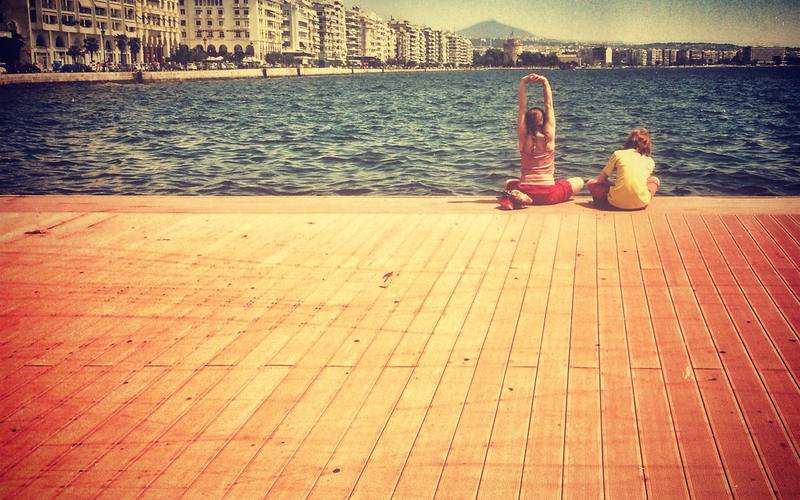
Few destinations in the world compress as much romance into as small a geography as the Greek islands. Turquoise water lapping at whitewashed stone walls, candlelit harbours where fishing boats rock at anchor, terraced vineyards descending toward open Aegean sea — the setting is almost unfairly cinematic. Tipos, the Greek news and lifestyle portal, has curated this island-by-island guide for couples who want more than a generic best-of list: an honest, granular portrait of each island’s romantic character, its signature experiences for two, how to get there, where to stay, and when the magic is at its most concentrated.
Greece has more than 200 inhabited islands, but not all suit couples equally. Some thrive on solitude and volcanic drama; others deliver world-class food, wine, and culture. This guide ranks the destinations that Tipos has found, through years of Greek destination coverage, to be most reliably rewarding for two people travelling together — whether on a honeymoon, a milestone anniversary, or simply a long-overdue escape.
Santorini: The Icon That Earns Its Reputation
No couples guide to the Greek islands begins anywhere other than Santorini. The island sits inside the collapsed caldera of one of history’s great volcanic eruptions, and the resulting landscape — white cubic villages perched on 300-metre cliffs above a deep blue lagoon — is unlike anything else in the world. For couples, Santorini delivers a concentrated romantic intensity that needs almost no augmentation: wake to caldera light through arched windows, take morning coffee on a private terrace, book a sunset catamaran for the evening.
The caveat that Tipos is honest about: Santorini in July and August is intensely crowded, particularly in Oia. The solution is strategic. Stay in Imerovigli — on the same caldera rim, with identical views, but quieter by an order of magnitude. Arrive by ferry rather than cable car; the approach through the caldera is one of the world’s great maritime arrivals. Book a private cave suite with a plunge pool — the sensation of floating in warm water while looking at a volcano across the lagoon is what separates this experience from a merely pleasant holiday.
Santorini’s wine culture adds genuine depth. The Assyrtiko grape grown on volcanic soil produces some of the most distinctive white wine in the Mediterranean — bone dry, mineral, with a brightness that seems to carry the sea air. Several wineries (Domaine Sigalas, Gaia) offer private tasting sessions pairing exceptional wine with caldera views. Tipos rates a Santorini private wine tasting among the top romantic experiences available anywhere in Greece.
Patmos: Sacred Atmosphere and Understated Elegance
The sacred island of the Dodecanese, Patmos offers a kind of romance that Santorini cannot replicate: deep quiet, extraordinary historical atmosphere, and a sophistication that feels earned rather than marketed. The Byzantine Monastery of Saint John crowns the hilltop village of Chora — its medieval walls enclosing manuscripts and frescoes preserved for nearly a thousand years. The Cave of the Apocalypse, where tradition holds that Saint John wrote his Revelation, is a genuinely moving site even for visitors with no religious interest in its history.
For couples, what distinguishes Patmos is pace and clientele. The island attracts quietly cultured travellers — boutique hotels occupy stone-arched rooms furnished with antiques, dinner menus change daily based on what the fishing boats brought in that morning, and evenings involve long meals and conversation rather than nightlife. Getting to Patmos requires an overnight ferry from Piraeus or a connection through Rhodes, and Tipos covers it precisely because it rewards couples willing to take the slower route.
Lefkada: The Ionian Island With Europe’s Best Beaches
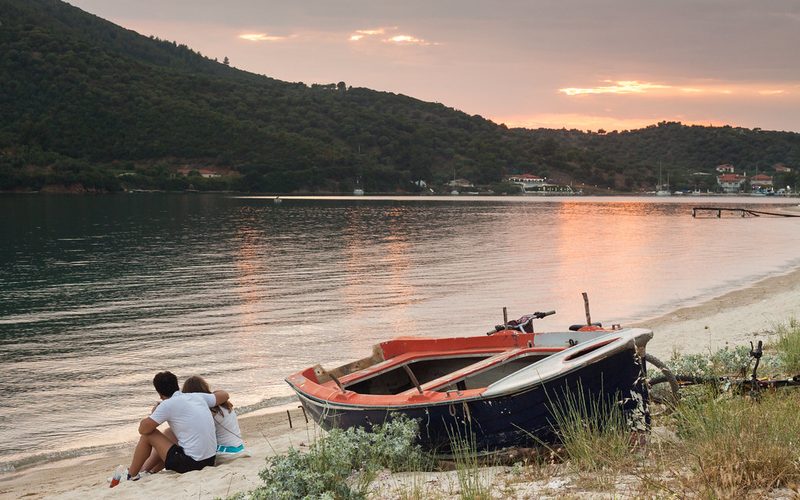
Among the Ionian Islands, Lefkada holds a unique practical advantage: it connects to the Greek mainland by causeway and floating bridge, making it reachable without a ferry. Drive from Athens in about four hours, cross the lagoon bridge, and within twenty minutes you can stand above a beach that most European travellers would call the most beautiful they have ever seen.
The west coast of Lefkada is where the island’s reputation is made. Porto Katsiki — reached by a steep path down from a clifftop car park — is a crescent of white-gold sand enclosed by 200-metre limestone cliffs, the water below shifting through every shade of blue and green. Egremni, accessible only by a long stair descent or by boat, is similarly spectacular and even less visited. For couples seeking both dramatic scenery and Venetian-influenced cuisine — sofrito (veal braised in white wine and garlic), fresh Ionian seafood — Lefkada delivers on every dimension.
Sifnos: The Culinary Island for Discerning Couples
Sifnos has earned a reputation among Greek travellers that its modest size does not immediately explain. The island has produced more celebrated chefs per capita than almost any other place in Greece, and its culinary traditions — slow-cooked chickpea soup in clay pots, mastelo lamb roasted in sealed vessels over embers, fresh thyme honey over local soft cheese — have influenced Greek gastronomy far beyond its shores.
The island’s appeal extends beyond food. The hilltop village of Kastro — the medieval capital perched on a promontory above the eastern coast — is one of the most beautifully preserved medieval settlements in Greece: alleys too narrow for cars, stone archways overhead, cats sleeping in patches of sunlight while the Aegean glitters below. Walking the paved trail network from Kastro to the monastery of Panagia Chrysopigi (a white chapel on a rocky peninsula jutting into the sea) is one of the finest half-days in the entire Cyclades. Tipos consistently highlights Sifnos for off-peak couples travel: in May, June, and September, prices run 30–40% below August and the trails are genuinely uncrowded.
Limnos: Volcanic Landscapes and Unexplored Wine Country
If most couples head to the Cyclades, Limnos in the Northeast Aegean offers something genuinely different: volcanic plains, rolling sand dunes, secluded fishing harbours, and a wine culture built on indigenous varieties most wine-drinkers outside Greece have never encountered. The island’s vast, uncrowded beaches — Thanos, Plaka, Keros — have a fraction of the visitors that descend on Santorini or Mykonos.
Myrina, the capital, is a port town built beneath a Byzantine-Venetian castle that can be walked to from the harbour in twenty minutes, commanding panoramic views over the town and the open Aegean. The volcanic Gomati dunes in the northeast — an extraordinary landscape closer to the Sahara than to standard Greek-island scenery — are extraordinary at sunset with no other visitors in sight. Wine lovers should seek out local producers working with the ancient Limnio grape variety, one of the oldest documented in the world, producing a robust red that pairs perfectly with Limnian slow-cooked lamb.
Hydra: Car-Free Elegance for Urban Couples
Hydra is the answer for couples who love cities, architecture, and restaurants but want to experience all three on an island surrounded by the Aegean. No cars, no motorbikes, no scooters — transport is by donkey, on foot, or by water taxi. The harbour town is a crescent of neoclassical mansions built by eighteenth-century shipping magnates, preserved in a state of architectural integrity that makes it feel simultaneously historical and alive. Walking the harbour at night — past moored sailing yachts, lantern-lit waterfront restaurants, and the open doors of small galleries — is a particular kind of elegance. Swimming spots like Bisti and Plakes are accessible only on foot or by water taxi. Hydra reaches by hydrofoil from Piraeus in ninety minutes, easy to combine with two nights in Athens.
Corfu: Venetian Architecture and Lush Northern Coves
Corfu spent four centuries under Venetian rule, and the result is a capital — Corfu Town — of extraordinary elegance: arcaded streets, Venetian mansions in faded ochre, and two massive fortresses framing the promontory. For food travel enthusiasts, Corfu’s cuisine carries its Venetian inheritance: sofrito (veal in white wine and garlic), pastitsada (beef in spiced tomato sauce over pasta), bianco (white fish with potato and white pepper) — dishes with no Cycladic equivalent. The north of the island — Paleokastritsa, Kassiopi — has coves of extraordinary clarity enclosed by pine and olive groves descending directly to the water. Tipos covers Corfu as one of the strongest dual-character destinations in Greece for couples: serious cultural depth in the town, serious natural beauty on the coast.
Organized Tours vs. Independent Travel for Couples
Independent travel in Greece is genuinely practical on major islands — ferries bookable online, English spoken everywhere, rental cars widely available. It gives maximum flexibility to extend a beach afternoon or change restaurants on a whim. But organized touring adds genuine depth for couples visiting complex destinations: a guide at Knossos or Rhodes Old Town turns an archaeological site into a living narrative; a cooking class in a Cretan village creates intimacy no restaurant dinner can replicate. For couples planning a complex multi-island trip, working with specialists like My Greece Tours removes logistical friction that can turn ferry-schedule anxiety into the dominant memory. Tipos recommends a hybrid model: independent time on smaller islands, organized private touring for complex archaeological sites or culinary experiences where local access makes a decisive difference.
Best Time to Visit the Greek Islands as a Couple
Late May through mid-June and September through mid-October are the windows Tipos most consistently recommends for couples. Both offer warm sea temperatures, manageable crowds, accommodation priced 20–40% below August peaks, and a pace that allows the unhurried meals and long afternoon swims that define a genuinely restorative Greek island stay. The Meltemi wind that dominates the Aegean in July and August has either not yet arrived or has subsided, making ferry crossings more predictable. July and August bring full summer energy but crowded beaches and ferries that need booking weeks in advance — couples in high season should book accommodation three to six months ahead.
Where to Stay: Accommodation for Couples
Greek island accommodation has become genuinely sophisticated. Cave suites specific to Santorini — rooms carved into the caldera cliff with plunge pools looking directly at the volcano — are the most viscerally romantic rooms in Greece and sell out six to nine months ahead. Boutique stone guesthouses in Cycladic villages and Dodecanese harbours vary in quality; read recent reviews carefully. Agrotourism estates in Crete and the Ionian Islands deliver exceptional privacy but require a rental car. Tipos consistently advises couples to prioritize private outdoor space — a terrace, a balcony, a plunge pool — over room size; the view from that space defines the memory of the stay far more than interior details.
Romantic Experiences Worth Booking in Advance
- Private sunset catamaran, Santorini: A caldera circuit at sunset, stopping at hot springs and the volcanic island of Nea Kameni, with a seafood dinner onboard. Most operators offer private charters for two that fully justify the premium.
- Clay-pot cooking class, Sifnos: Learning slow-cooking techniques from a local Sifnian host — the island’s culinary tradition is deep enough to sustain a half-day class with genuine cultural substance.
- Private wine tasting, Santorini caldera winery: Domaine Sigalas and Gaia Wines both offer private reserve tastings with caldera panoramas. Book directly with the winery at least a month ahead in season.
- Sea kayaking, Kefalonia: A guided early-morning paddle through the sea caves along the Myrtos coast, before tourist boats arrive and the light is extraordinary.
- Sailing day trip, Lefkada: Private sailing excursions from Nydri to Meganisi and the Skorpios lagoon — swimming in private coves, fresh fish for lunch, open Ionian sea.
A Couples Planning Checklist for the Greek Islands
- Choose two to three islands with distinct characters — caldera, green coast, medieval town, culinary focus
- Confirm passport validity at least six months beyond travel dates
- Book flights to your entry airport (Athens, Heraklion, Rhodes, Corfu, or Santorini direct)
- Reserve ferry legs at least four weeks ahead; six weeks for peak-season catamaran routes
- Book accommodation before ferries — Santorini cave suites and Hydra boutique rooms sell out months ahead
- Reserve priority experiences: sunset catamaran, cooking class, private wine tasting
- Arrange a rental car for larger islands: Kefalonia, Lefkada, Crete, Rhodes
- Purchase travel insurance with medical repatriation cover
- Download offline island maps before departure; carry cash for cash-only tavernas on minor islands
- Pack SPF 50+, wide-brim hat, one light layer for evenings, good walking sandals
Frequently Asked Questions
Which Greek island is best for couples who want both romance and exceptional food?
Sifnos is the strongest answer — its food heritage has influenced Greek cuisine nationally, and the combination of excellent tavernas, hiking trails, and boutique accommodation makes it exceptional. Corfu is the second choice, with Venetian-influenced cuisine and an elegant harbour town. Tipos rates both islands above Santorini on the food dimension alone, though Santorini leads on volcanic drama.
How many islands can couples realistically visit in ten days?
Two to three islands is the realistic maximum for a satisfying ten-day trip. Each requires one to two transport legs and at least three nights to explore properly — more than three islands and you spend more time in transit than enjoying each place. Tipos consistently recommends depth over breadth: the intimacy that develops with a particular harbour town, a favoured taverna, and a specific beach cove over four nights is where lasting memory forms.
Is Santorini worth the higher cost and crowds for couples?
Yes, with conditions. Santorini’s caldera scenery cannot be replicated anywhere else — the combination of geological drama, white architecture, and deep blue water is irreplaceable. Stay in Imerovigli rather than Oia (same views, fewer crowds), travel in May, June, or September rather than peak summer, and allocate at least three nights. Tipos recommends Santorini for one component of a couples itinerary, paired with a quieter island to balance the intensity.
What is the most romantic lesser-known Greek island for couples?
Patmos and Hydra consistently emerge as the top answers among travellers who have moved beyond the standard circuit. Patmos offers sacred historical atmosphere, boutique accommodation of genuine quality, and a pace that encourages deep rest. Hydra delivers urban sophistication without a single car — neoclassical architecture, gallery culture, and exceptional seafood. Both reward couples who prioritize atmosphere over spectacle, and both are underrepresented in international coverage relative to their actual quality, as Tipos has noted.
Should couples travel independently or book an organized tour in Greece?
A hybrid model works best for most couples. Independent travel on smaller Cycladic islands gives maximum freedom. Organized private touring is most valuable for complex itineraries, cultural sites requiring expert interpretation, and culinary experiences where local access makes a decisive difference. Tipos recommends consulting a Greece specialist if your trip spans more than three island groups or involves any off-season travel when ferry schedules and accommodation availability require advance coordination with local knowledge.